Case

Denmark Stopped Sending Passports by Post. Nobody at the Town Hall Had to Stay Late.

Location SKOVLUNDE

On 1 January 2022, Denmark stopped sending passports by post. An order from the Ministry of Justice, signed four days earlier, said a new passport must be collected in person at the municipality, with proof of the holder's identity. Too many passports had been going missing in the mail, and a missing passport is a passport somebody else can use.

In most countries that decision starts a project. A budget line, a procurement, a rollout plan, a transition period, and a few years in which town halls stay open late. In Denmark it started nothing new. The order never mentions a machine. It says a passport must be collected at the municipality, and it lists two-factor eID with a phone code as proof enough of who you are. That is a description of a document box. The box already existed, and it already worked that way.

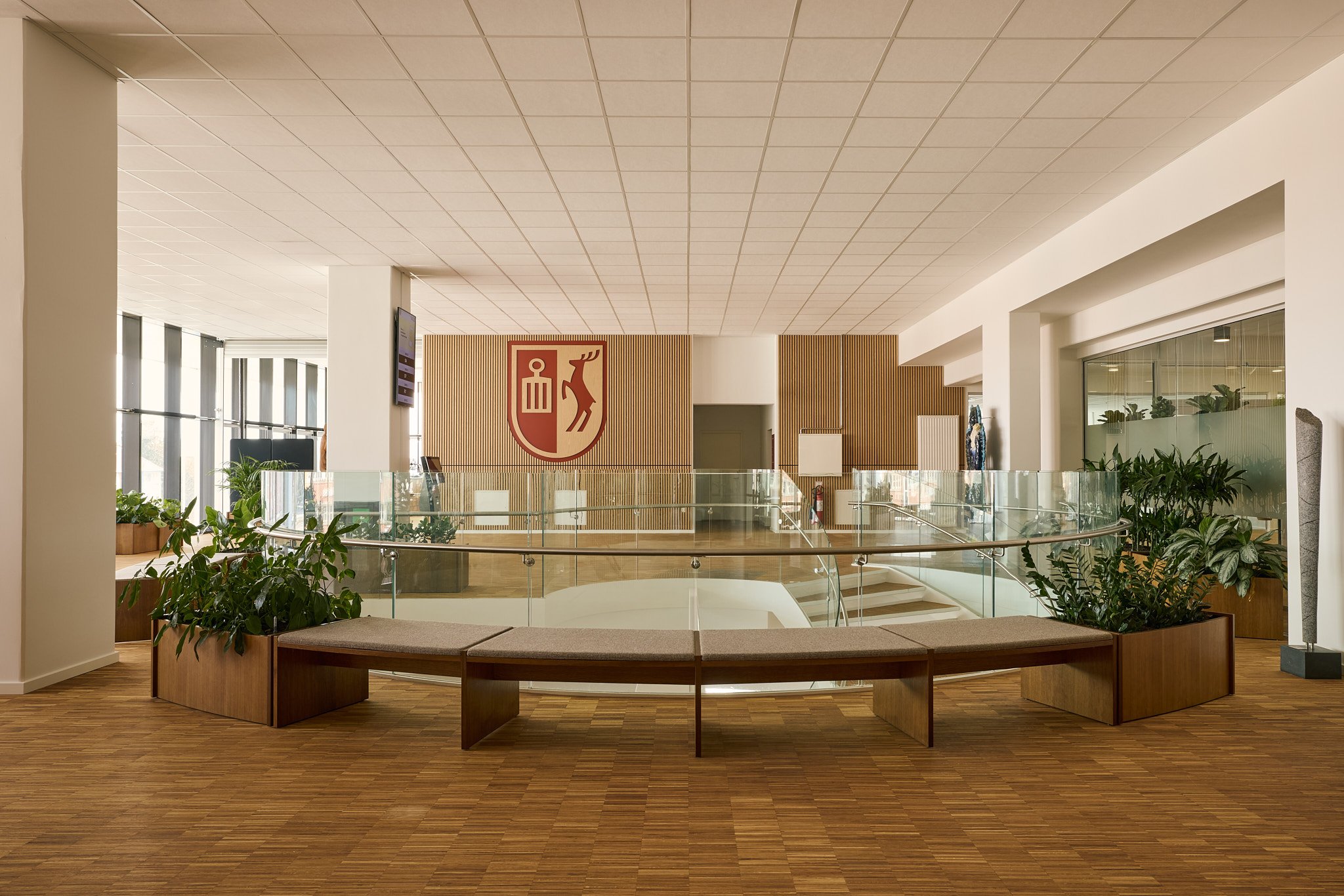
One municipality's own news item shows how quickly the country took the hint. Order in force on 1 January. New box in the town hall foyer for every passport ordered from 15 March. Ten weeks, no tender, no line in the budget.

That is the part foreign visitors find hardest to believe, and it comes down to who pays.

The municipality never receives an invoice. The supplier installs the box, the equipment that takes the photo and fingerprints at the counter, the case management software behind the process and the support, and is paid per photograph taken at the counter, roughly what the citizen used to pay a photographer. No municipal money changes hands, so the decision never reaches procurement or the council. It sits with the person who runs the counter and sees the queue.

The same arrangement is why the box works. The supplier is paid only when the station works and the queue moves. A passport that cannot be collected is the supplier's revenue sitting in a drawer. The incentive to solve the next problem is built into the invoice the municipality never gets.

The supplier is Mirra, a company in Skovlunde, west of Copenhagen. Mirra does not issue passports; the police do. Mirra delivers the self-service and case management behind the municipal process, the capture equipment at the counter and the box the passport comes out of.

None of this would have spread in a country where the digital route was the exception. Denmark has topped the UN E-Government Survey in every edition since 2018. 97% of citizens hold a national eID, 89% book an appointment before they come to the town hall, and 82% say they trust digital public services.

As one head of citizen service in Denmark put it to German colleagues this autumn: the national digital infrastructure becomes real at local level. Citizens do not experience an abstract system. They experience a meeting, a phone call, a letter or a self-service solution, and the municipality's job is to connect those channels.

It also would not have spread if the product had been designed somewhere else. The first systems were built with a handful of early movers among the municipalities, where the supplier's people sat inside citizen service and shaped the product around what caseworkers did all day. Nobody wrote a specification. One municipality described the result to German colleagues in Bonn in September, under the heading Public Private Partnership:

We, together with our supplier, have for decades co-developed, built and continuously improved the Danish citizen journey. That municipality has a product owner for its self-service, who is also its single point of contact to its partners. A partnership you can find in an org chart.

What the order described looks like this. The passport comes back from the printer, and the caseworker loads it from the case system, which checks that the right document is in hand before a drawer opens. The citizen gets a text with a code. At the box they log in with their eID, enter the code, and feed in the old passport, which stays valid until that moment. The machine reads the chip, punches it invalid, and only then releases the new one. The case marks itself handed over. Half a minute. A passport nobody collects goes back to the counter after a while, and the citizen gets another text.

The units come in modules of 19, 76 and 152 drawers, so a small town hall runs one cabinet and a large one runs a wall. In the capital, 50,667 passports came out of dispensers at seven locations in the last twelve months. A fifth of them were collected between four in the afternoon and midnight, and 4,086 at weekends; some of the boxes are open until ten at night, seven days a week. The town hall was closed for every one of them. In the country's second city, four units of 152 drawers each stand in the public library.

The counter changed with it. In a municipality of about 42,000 north of Copenhagen, a citizen gets a secure link in their digital mailbox three months before the passport expires, applies, books and pays from home, and is booked for four minutes at the counter. Capture and case handling take about two. The photo is taken with a handheld camera over the desk, which works for babies, children and wheelchair users in a way a kiosk never did.

Six employees do what twelve did seven years ago. Asked what takes the most time, the municipality's answer is on the slide: The biggest time consumer? The coffee machine.

"When the ministry ended postal delivery, nobody called us," says Alex Ramskov Johannsen, Mirra's chief executive. "They didn't need to. The order described something that was already standing in town halls. That's usually how it goes in Denmark: the counter finds the answer, and the rule is written around it."

The passport box is not the only Danish rule written around something that already worked at a counter. The expiry reminder, the application and payment from home, the handheld camera and the evening pickup all arrived the same way, in practice first. In fifteen years, no Danish municipality has switched away.

In Germany, more than a hundred administrations now run the same box, in citizen offices, town hall foyers, a shopping centre, a bank branch, a supermarket and a library, with a text message doing the job of the eID. The model was Danish first. So was the idea behind it: that a passport is no longer something that arrives. It is something you come and get.

Eager to learn more? Don't hesitate to reach out.

Related cases